

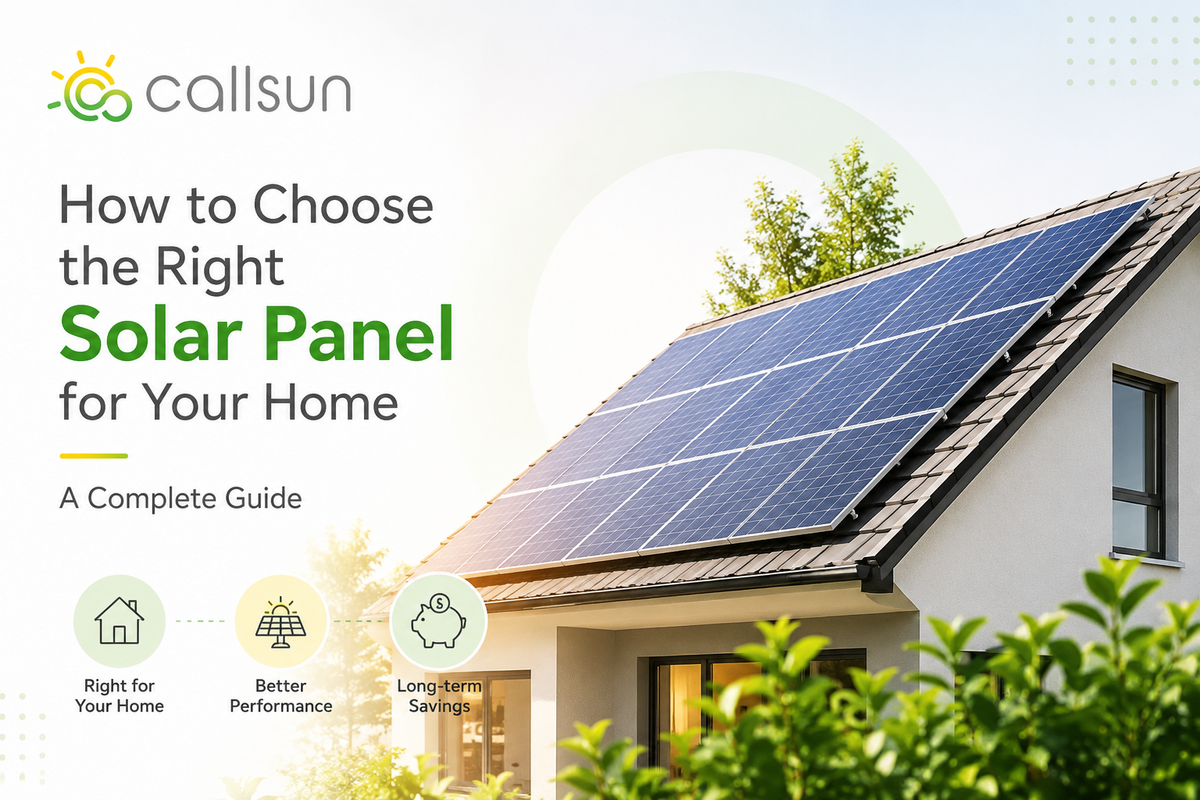
Choosing solar panels for your home is an important decision that can affect your energy costs, property value, and long-term sustainability. With many solar panel types, efficiency ratings, warranties, and installation options available, it can be difficult to know which system is right for your household.Understanding the essential factors before purchasing can help you make a confident and cost-effective choice.
Understand Your Home’s Solar Energy Needs
Before comparing solar panels, start by understanding how much electricity your home uses. Review your recent electricity bills to determine your average monthly and annual consumption. Your household size, appliances, heating and cooling systems, and daily routines all influence your energy requirements.
A professional solar installer can also evaluate your property and estimate the appropriate system size. This assessment considers your electricity consumption, available roof space, local climate, and expected sunlight exposure. Choosing a system based on actual energy needs prevents you from paying for unnecessary capacity while ensuring your panels can produce enough electricity.
Compare Different Types of Solar Panels
The three common residential solar panel technologies are monocrystalline, polycrystalline, and thin-film. Monocrystalline panels are generally recognized for their high efficiency and strong performance when roof space is limited. Their sleek appearance also makes them popular for residential installations.
Polycrystalline panels can provide a more budget-friendly option, although they generally have lower efficiency than monocrystalline models. Thin-film panels are lightweight and flexible, but they typically require more space to generate the same amount of electricity.
The best solar panel depends on your roof size, budget, energy requirements, and installation conditions rather than simply choosing the technology with the highest efficiency rating.
Check Solar Panel Efficiency
Efficiency indicates how effectively a solar panel converts sunlight into usable electricity. Higher-efficiency panels can generate more electricity from the same amount of roof space, making them particularly useful for smaller homes or properties with limited usable roofing.
However, efficiency should not be the only factor you consider. A highly efficient panel may cost more, so compare its expected energy production, warranty, degradation rate, and overall value. Looking at the complete performance profile provides a better understanding of whether a particular panel is worth the investment.
Consider Your Roof and Sunlight Exposure
Your roof plays a major role in solar performance. Before installation, consider its orientation, pitch, condition, and available space. Areas shaded by trees, neighboring buildings, chimneys, or other structures may receive less sunlight and reduce energy production.
A solar professional can perform a site assessment to identify potential shading issues and determine the best panel placement. If your roof requires repairs or replacement, addressing those issues before installing solar panels may also prevent additional costs later.
Evaluate Solar Panel Durability and Warranty
Solar panels are designed to operate outdoors for decades, so durability is an important consideration. Look for panels that are tested to withstand common environmental conditions such as strong winds, temperature changes, moisture, and snow where applicable.
Pay close attention to both the product warranty and performance warranty. The product warranty generally covers manufacturing defects, while the performance warranty provides assurances about how much electricity the panel should continue producing over time.
A longer, clearly defined warranty can provide additional confidence when making a major home energy investment.
Calculate the Total Cost of Going Solar
The purchase price of solar panels is only one part of the overall investment. Installation, mounting equipment, wiring, inverters, permits, monitoring systems, and potential electrical upgrades can all affect the final cost.
When comparing quotes, look at the total installed price rather than focusing only on the price of individual panels. You should also consider estimated electricity savings and the expected payback period.
If you are researching solar equipment or comparing ways to reduce your purchase costs, checking available Callsun Solar Promo Codes through a reputable savings platform such as ReeCoupons can be another way to look for potential offers before completing an eligible purchase.
Think About Inverters and Energy Storage
Solar panels produce direct-current electricity, while most household appliances use alternating current. An inverter converts the electricity into a usable form for your home. Depending on your installation, you may encounter string inverters, microinverters, or power optimizers.
Battery storage is another option worth considering. A home solar battery can store excess electricity generated during sunny periods for later use. This can be particularly useful when solar production falls in the evening or during power interruptions, although batteries increase the overall system cost.
Compare Installation Companies Carefully
Selecting the right installer is just as important as selecting the panels. Look for an experienced company with appropriate credentials, transparent pricing, clear warranties, and positive customer feedback.
Ask potential installers about equipment brands, installation timelines, maintenance, monitoring, permits, and after-sales support. A trustworthy installer should explain the system clearly and provide a detailed proposal rather than pressuring you into making a quick decision.
Consider Long-Term Solar Performance
Solar panels are a long-term investment, so think beyond the initial purchase. Panel degradation, maintenance requirements, inverter replacement, energy production, and future electricity prices can all affect the value of your system.
A slightly more expensive panel with strong efficiency, durability, and warranty coverage may offer better long-term value than a cheaper alternative with limited protection. Comparing lifetime performance instead of upfront price alone can help you make a smarter decision.
Make a Solar Choice That Fits Your Home
Choosing the right solar panel requires a balance between efficiency, cost, durability, roof conditions, energy consumption, warranties, and installation quality. There is no single solar panel that is perfect for every household. The right choice is the one that matches your property and delivers reliable energy production within your budget.
Take time to compare specifications, request multiple installation quotes, understand the complete system cost, and research available savings opportunities. If you are looking for potential discounts before purchasing eligible solar products, Callsun Solar Promo Codes can be researched alongside other offers available through ReeCoupons.
With careful planning and informed comparison, solar energy can become a practical way to generate cleaner electricity while potentially reducing your dependence on traditional grid power for years to come.